

Integrating Video Players in Flutter: A Comprehensive Guide
Introduction
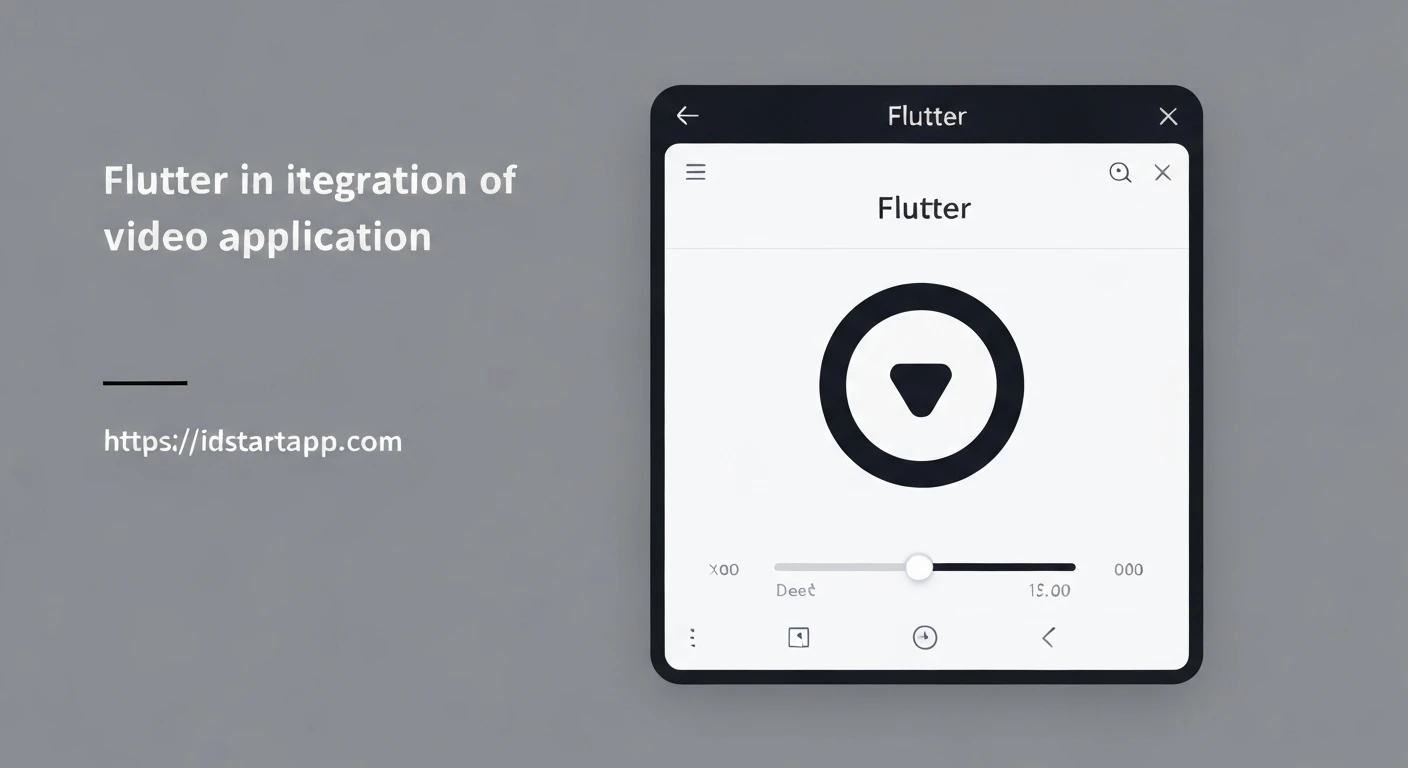
Integrating video playback functionality into mobile and web applications has become an indispensable feature, enhancing user engagement and content delivery. Flutter, Google's UI toolkit for building natively compiled applications for mobile, web, and desktop from a single codebase, offers robust capabilities for embedding video players. This article provides a professional guide to integrating video players in Flutter, covering essential packages, implementation steps, and best practices.
Why Integrate Video Players in Flutter Applications?
Video content is king in the digital age. From tutorials and advertisements to social media feeds and streaming services, video plays a crucial role. Integrating video players allows Flutter applications to:
- Deliver rich, dynamic content.
- Improve user retention and interaction.
- Support e-learning platforms, entertainment apps, and video conferencing tools.
- Provide immersive user experiences across various platforms with a consistent UI.
Key Considerations Before Integration
Before diving into implementation, it's important to consider several factors:
- Platform Compatibility: Ensure the chosen solution works seamlessly across Android, iOS, web, and desktop.
- Performance: Video playback can be resource-intensive. Optimizing for smooth playback and minimal battery drain is crucial.
- Codecs and Formats: Support for various video codecs (e.g., H.264, H.265) and formats (e.g., MP4, HLS, DASH) is often required.
- User Interface and Controls: Whether to use default player controls or implement custom UI elements.
- Error Handling: Gracefully managing network issues, unsupported formats, or decoding errors.
Popular Flutter Video Player Packages
Flutter's rich package ecosystem provides excellent options for video playback. The two primary packages are:
video_player: This is the official Flutter plugin for playing videos. It supports local files, assets, and network videos. It provides core functionality without built-in UI controls, offering maximum flexibility for custom interfaces.chewie: Built on top ofvideo_player, Chewie provides a comprehensive set of customizable Material and Cupertino-styled video player controls. It significantly speeds up development by offering a ready-to-use player UI.flick_video_player: Another powerful alternative offering highly customizable controls, full-screen capabilities, and more advanced features like auto-play and loop.
Step-by-Step Integration with video_player
For granular control and a deep understanding, we will start with the video_player package.
1. Adding the Dependency
First, add the video_player package to your pubspec.yaml file:
dependencies:
  flutter:
    sdk: flutter
  video_player: ^2.8.1 # Use the latest stable version
Then, run flutter pub get to fetch the package.
2. Initializing the Video Player
To play a video, you need to initialize a VideoPlayerController. This can be done for network, asset, or file-based videos.
import 'package:flutter/material.dart';
import 'package:video_player/video_player.dart';

class VideoPlayerScreen extends StatefulWidget {
  const VideoPlayerScreen({Key? key}) : super(key: key);

  @override
  State createState() => _VideoPlayerScreenState();
}

class _VideoPlayerScreenState extends State {
  late VideoPlayerController _controller;
  late Future _initializeVideoPlayerFuture;

  @override
  void initState() {
    super.initState();
    // For network video:
    _controller = VideoPlayerController.networkUrl(
      Uri.parse('https://flutter.github.io/assets-for-api-docs/assets/videos/butterfly.mp4'),
    );

    // For asset video:
    // _controller = VideoPlayerController.asset('assets/my_video.mp4');
    // Ensure 'assets/my_video.mp4' is added to pubspec.yaml

    // For file video:
    // _controller = VideoPlayerController.file(File('path/to/my_video.mp4'));

    _initializeVideoPlayerFuture = _controller.initialize().then((_) {
      setState(() {}); // Ensure the first frame is shown
    });
    _controller.setLooping(true); // Loop the video
  }

  @override
  Widget build(BuildContext context) {
    // ... UI will be built here
    return Container(); // Placeholder
  }

  @override
  void dispose() {
    _controller.dispose();
    super.dispose();
  }
}
3. Controlling Playback
You can control playback using methods on the _controller, such as play(), pause(), seekTo(), and setVolume().
// Inside _VideoPlayerScreenState
// ...
FloatingActionButton(
  onPressed: () {
    setState(() {
      if (_controller.value.isPlaying) {
        _controller.pause();
      } else {
        _controller.play();
      }
    });
  },
  child: Icon(
    _controller.value.isPlaying ? Icons.pause : Icons.play_arrow,
  ),
),
4. Displaying the Video
The VideoPlayer widget is used to display the video stream. It should be wrapped in an AspectRatio widget to maintain the video's original aspect ratio.
// Inside the build method of _VideoPlayerScreenState
@override
Widget build(BuildContext context) {
  return Scaffold(
    appBar: AppBar(title: const Text('Video Player Demo')),
    body: FutureBuilder(
      future: _initializeVideoPlayerFuture,
      builder: (context, snapshot) {
        if (snapshot.connectionState == ConnectionState.done) {
          return Center(
            child: AspectRatio(
              aspectRatio: _controller.value.aspectRatio,
              child: VideoPlayer(_controller),
            ),
          );
        } else {
          return const Center(child: CircularProgressIndicator());
        }
      },
    ),
    floatingActionButton: FloatingActionButton(
      onPressed: () {
        setState(() {
          _controller.value.isPlaying ? _controller.pause() : _controller.play();
        });
      },
      child: Icon(
        _controller.value.isPlaying ? Icons.pause : Icons.play_arrow,
      ),
    ),
  );
}
5. Disposing Resources
It is crucial to dispose of the VideoPlayerController when it's no longer needed to release system resources and prevent memory leaks. This is typically done in the dispose() method of your StatefulWidget.
@override
void dispose() {
  _controller.dispose();
  super.dispose();
}
Enhancing UX with chewie
While video_player provides core functionality, it lacks built-in controls. chewie simplifies this by offering ready-to-use Material and Cupertino style controls. To use Chewie:
dependencies:
  flutter:
    sdk: flutter
  video_player: ^2.8.1
  chewie: ^1.7.4 # Use the latest stable version
Initialize VideoPlayerController as before, then create a ChewieController:
import 'package:flutter/material.dart';
import 'package:video_player/video_player.dart';
import 'package:chewie/chewie.dart';

class ChewieVideoPlayerScreen extends StatefulWidget {
  const ChewieVideoPlayerScreen({Key? key}) : super(key: key);

  @override
  State createState() => _ChewieVideoPlayerScreenState();
}

class _ChewieVideoPlayerScreenState extends State {
  late VideoPlayerController _videoPlayerController;
  late ChewieController _chewieController;

  @override
  void initState() {
    super.initState();
    _videoPlayerController = VideoPlayerController.networkUrl(
      Uri.parse('https://flutter.github.io/assets-for-api-docs/assets/videos/butterfly.mp4'),
    );

    _chewieController = ChewieController(
      videoPlayerController: _videoPlayerController,
      aspectRatio: 16 / 9,
      autoPlay: true,
      looping: true,
      // Optional: customize controls
      // customControls: const MaterialControls(),
      // showControls: false,
      // allowFullScreen: false,
    );
  }

  @override
  Widget build(BuildContext context) {
    return Scaffold(
      appBar: AppBar(title: const Text('Chewie Video Player')),
      body: Center(
        child: Chewie(
          controller: _chewieController,
        ),
      ),
    );
  }

  @override
  void dispose() {
    _videoPlayerController.dispose();
    _chewieController.dispose();
    super.dispose();
  }
}
Advanced Topics and Best Practices
Handling Different Video Sources (Network, Assets, File)
As demonstrated, VideoPlayerController.networkUrl(), VideoPlayerController.asset(), and VideoPlayerController.file() cater to different source types. Ensure proper asset declaration in pubspec.yaml for local assets and file permissions for file-based videos.
Buffering and Loading States
Video loading can take time, especially for network videos. It's good practice to show a loading indicator while the video buffers. You can listen to the _controller.value.isBuffering property or check the FutureBuilder snapshot connection state.
// Inside FutureBuilder for _videoPlayerController initialization
if (snapshot.connectionState == ConnectionState.done) {
  if (_videoPlayerController.value.hasError) {
    return Center(child: Text('Error: ${_videoPlayerController.value.errorDescription}'));
  }
  return AspectRatio(
    aspectRatio: _videoPlayerController.value.aspectRatio,
    child: Stack(
      alignment: Alignment.bottomCenter,
      children: [
        VideoPlayer(_videoPlayerController),
        _videoPlayerController.value.isBuffering
            ? const CircularProgressIndicator() // Show buffering indicator
            : Container(),
        // Custom controls can be added here
      ],
    ),
  );
} else {
  return const Center(child: CircularProgressIndicator());
}
Error Handling
Videos might fail to load due to network issues, invalid URLs, or unsupported formats. Monitor _controller.value.hasError and _controller.value.errorDescription to provide meaningful feedback to the user.
Performance Optimization
- Release Resources: Always dispose of controllers when no longer needed using
controller.dispose(). - Pre-buffering: For multiple videos, consider pre-buffering upcoming videos, but be mindful of memory usage.
- Optimal Resolutions: Serve videos in appropriate resolutions to minimize bandwidth and processing overhead.
- Hardware Acceleration: The underlying native players (ExoPlayer on Android, AVPlayer on iOS) generally leverage hardware acceleration, but ensure Flutter UI doesn't block the render thread excessively.
Platform-Specific Nuances
- iOS: Ensure your
Info.plisthas the necessary network permissions if fetching videos from the internet. - Android: For internet videos, ensure
AndroidManifest.xmlincludes<uses-permission android:name="android.permission.INTERNET"/>. Some Android versions might require specific codec support or configurations for certain video formats. - Web: Web platform support for
video_playeris good, but browser limitations on autoplay and specific codecs should be considered.
Conclusion
Integrating video players in Flutter applications is a straightforward process, thanks to powerful packages like video_player and chewie. By understanding the core functionalities, adhering to best practices, and considering performance and error handling, developers can deliver engaging and robust video experiences across diverse platforms. Whether building a simple video showcase or a complex streaming service, Flutter provides the tools necessary to achieve a high-quality video integration.