
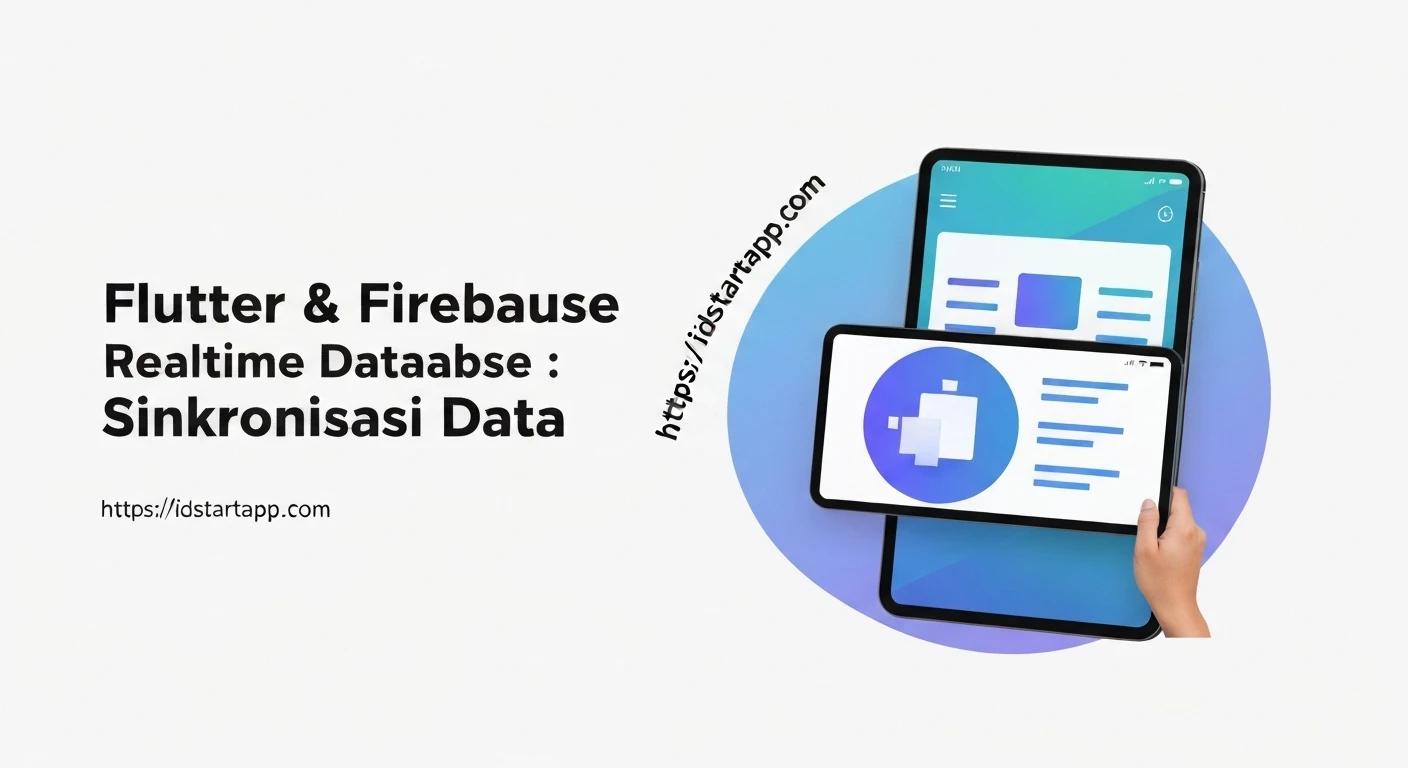

Flutter & Firebase Realtime Database: Data Synchronization
In the realm of modern application development, providing users with up-to-date and consistent data is paramount. This is where real-time data synchronization becomes a critical feature. Combining Flutter, Google's UI toolkit for building natively compiled applications from a single codebase, with Firebase Realtime Database, a cloud-hosted NoSQL database, offers a powerful and efficient solution for achieving seamless data synchronization across all connected clients.
Why Flutter and Firebase Realtime Database?
The synergy between Flutter and Firebase Realtime Database is compelling for several reasons:
- Cross-Platform Development: Flutter allows developers to build beautiful, natively compiled applications for mobile, web, and desktop from a single codebase, significantly reducing development time and cost.
- Real-time Capabilities: Firebase Realtime Database stores and synchronizes data with all connected clients in real-time. When data changes, all connected devices receive the update almost instantaneously.
- Offline Support: Firebase SDKs automatically handle network interruptions. Data remains available offline, and when connectivity is restored, the SDK synchronizes any local changes with the server.
- Ease of Use: Firebase provides easy-to-use SDKs for various platforms, simplifying the integration of real-time features into Flutter applications.
- Scalability: Firebase services are designed to scale automatically, handling increased user loads without manual intervention.
Understanding Firebase Realtime Database
Firebase Realtime Database is a NoSQL cloud database that stores data as a single, large JSON tree. It's unique in its ability to synchronize data in real-time to every connected client. When you build cross-platform apps with the Firebase SDKs, all your clients share one Realtime Database instance and automatically receive updates with the newest data. This makes it ideal for applications requiring immediate data propagation, such as chat applications, collaborative tools, or live dashboards.
Setting Up Firebase in a Flutter Project
Before diving into synchronization, ensure your Flutter project is connected to Firebase:
- Create a Firebase project in the Firebase console.
- Register your Flutter app(s) (iOS, Android, Web) with the Firebase project.
- Download and add the respective configuration files (`google-services.json` for Android, `GoogleService-Info.plist` for iOS) to your Flutter project.
- Add the necessary Firebase dependencies to your `pubspec.yaml` file.
dependencies:
  flutter:
    sdk: flutter
  firebase_core: ^2.24.0 # Use the latest version
  firebase_database: ^10.3.7 # Use the latest version
Then run `flutter pub get` to fetch the packages.
Initialize Firebase in your `main` function:
import 'package:firebase_core/firebase_core.dart';
import 'package:flutter/material.dart';

void main() async {
  WidgetsFlutterBinding.ensureInitialized();
  await Firebase.initializeApp();
  runApp(MyApp());
}

class MyApp extends StatelessWidget {
  @override
  Widget build(BuildContext context) {
    return MaterialApp(
      title: 'Flutter Firebase Sync',
      theme: ThemeData(
        primarySwatch: Colors.blue,
      ),
      home: MyHomePage(),
    );
  }
}
Core Concepts of Data Synchronization
1. Writing DataYou can write data to the database using `set()`, `update()`, or `push()`. `set()` overwrites data at a specified location, `update()` partially updates data, and `push()` generates a unique key for each new child, ideal for lists.
import 'package:firebase_database/firebase_database.dart';

final databaseReference = FirebaseDatabase.instance.ref();

Future createTodo(String title, String description) async {
  final newTodoRef = databaseReference.child('todos').push();
  await newTodoRef.set({
    'id': newTodoRef.key,
    'title': title,
    'description': description,
    'isCompleted': false,
    'timestamp': ServerValue.timestamp,
  });
  print("Todo added with ID: ${newTodoRef.key}");
}

Future updateTodo(String id, String newTitle, bool isCompleted) async {
  await databaseReference.child('todos').child(id).update({
    'title': newTitle,
    'isCompleted': isCompleted,
  });
  print("Todo with ID: $id updated.");
}

Future deleteTodo(String id) async {
  await databaseReference.child('todos').child(id).remove();
  print("Todo with ID: $id deleted.");
}
To fetch data only once, use `get()`. This is useful for data that doesn't change frequently or when you only need a snapshot at a specific point in time.
Future fetchTodosOnce() async {
  DatabaseEvent event = await databaseReference.child('todos').once();
  if (event.snapshot.exists) {
    print("Data: ${event.snapshot.value}");
    // You'd typically parse this into a list of objects
  } else {
    print("No data available.");
  }
}
The true power of Firebase Realtime Database lies in its ability to listen for changes. You can subscribe to value events to get an entire snapshot of the data, or child events to detect when children are added, changed, or removed.
- `onValue`: Listens for changes to the data at a particular database reference. Every time the data changes, the listener receives the entire data snapshot.
- `onChildAdded`: Triggered once for each existing child and then again every time a new child is added to the specified path.
- `onChildChanged`: Triggered when the data for any of the children of the specified path changes.
- `onChildRemoved`: Triggered when a child is removed from the specified path.
In Flutter, `StreamBuilder` is an excellent widget to handle these real-time streams.
Implementing Data Synchronization with `StreamBuilder`
Let's create a simple Todo application to demonstrate real-time synchronization.
import 'package:firebase_database/firebase_database.dart';
import 'package:flutter/material.dart';

class Todo {
  String id;
  String title;
  String description;
  bool isCompleted;
  int timestamp;

  Todo({this.id, this.title, this.isCompleted, this.description, this.timestamp});

  factory Todo.fromSnapshot(DataSnapshot snapshot) {
    Map data = snapshot.value as Map;
    return Todo(
      id: snapshot.key,
      title: data['title'] ?? '',
      description: data['description'] ?? '',
      isCompleted: data['isCompleted'] ?? false,
      timestamp: data['timestamp'] ?? 0,
    );
  }
}

class MyHomePage extends StatefulWidget {
  @override
  _MyHomePageState createState() => _MyHomePageState();
}

class _MyHomePageState extends State {
  final DatabaseReference _databaseRef = FirebaseDatabase.instance.ref().child('todos');
  final TextEditingController _titleController = TextEditingController();
  final TextEditingController _descriptionController = TextEditingController();

  void _addTodo() async {
    if (_titleController.text.isEmpty) return;
    final newTodoRef = _databaseRef.push();
    await newTodoRef.set({
      'id': newTodoRef.key,
      'title': _titleController.text,
      'description': _descriptionController.text,
      'isCompleted': false,
      'timestamp': ServerValue.timestamp,
    });
    _titleController.clear();
    _descriptionController.clear();
  }

  void _toggleTodoStatus(Todo todo) {
    _databaseRef.child(todo.id).update({
      'isCompleted': !todo.isCompleted,
    });
  }

  void _deleteTodo(String id) {
    _databaseRef.child(id).remove();
  }

  @override
  Widget build(BuildContext context) {
    return Scaffold(
      appBar: AppBar(
        title: Text('Realtime Todos'),
      ),
      body: Column(
        children: [
          Padding(
            padding: const EdgeInsets.all(8.0),
            child: Column(
              children: [
                TextField(
                  controller: _titleController,
                  decoration: InputDecoration(labelText: 'Todo Title'),
                ),
                TextField(
                  controller: _descriptionController,
                  decoration: InputDecoration(labelText: 'Todo Description'),
                ),
                ElevatedButton(
                  onPressed: _addTodo,
                  child: Text('Add Todo'),
                ),
              ],
            ),
          ),
          Expanded(
            child: StreamBuilder(
              stream: _databaseRef.onValue,
              builder: (context, AsyncSnapshot snapshot) {
                if (snapshot.connectionState == ConnectionState.waiting) {
                  return Center(child: CircularProgressIndicator());
                }
                if (snapshot.hasError) {
                  return Center(child: Text('Error: ${snapshot.error}'));
                }
                if (!snapshot.hasData || snapshot.data.snapshot.value == null) {
                  return Center(child: Text('No Todos yet!'));
                }

                // DataSnapshot has the raw data
                Map todosMap = snapshot.data.snapshot.value as Map;
                List todos = [];
                todosMap.forEach((key, value) {
                  todos.add(Todo.fromSnapshot(snapshot.data.snapshot.child(key)));
                });

                // Sort by timestamp if desired (latest first)
                todos.sort((a, b) => b.timestamp.compareTo(a.timestamp));

                return ListView.builder(
                  itemCount: todos.length,
                  itemBuilder: (context, index) {
                    Todo todo = todos[index];
                    return Card(
                      margin: EdgeInsets.symmetric(horizontal: 10, vertical: 5),
                      child: ListTile(
                        title: Text(
                          todo.title,
                          style: TextStyle(
                            decoration: todo.isCompleted ? TextDecoration.lineThrough : TextDecoration.none,
                          ),
                        ),
                        subtitle: Text(todo.description),
                        leading: Checkbox(
                          value: todo.isCompleted,
                          onChanged: (bool? newValue) {
                            _toggleTodoStatus(todo);
                          },
                        ),
                        trailing: IconButton(
                          icon: Icon(Icons.delete, color: Colors.red),
                          onPressed: () => _deleteTodo(todo.id),
                        ),
                        onLongPress: () {
                          // Optional: Implement edit functionality
                        },
                      ),
                    );
                  },
                );
              },
            ),
          ),
        ],
      ),
    );
  }
}
Best Practices for Data Synchronization
- Data Structuring: Design your database structure for scalability and efficiency. Prefer a flat data structure over deeply nested ones to minimize data retrieval. Avoid nesting data more than three to four levels deep.
- Security Rules: Implement robust Firebase Security Rules to control who can read and write data. This is crucial for protecting your database from unauthorized access and ensuring data integrity.
- Offline Capabilities: Leverage Firebase's built-in offline persistence. The Realtime Database client automatically stores data locally and synchronizes it when connectivity is restored.
- Error Handling: Always include error handling in your database operations and stream listeners to gracefully manage network issues, permission denials, or data format errors.
- Indexing: Use database indexes to speed up queries, especially when ordering or filtering data.
- Transaction Support: For complex updates where data consistency is critical (e.g., incrementing a counter), use Firebase transactions to ensure atomic operations.
Conclusion
Flutter and Firebase Realtime Database offer an unparalleled combination for developing dynamic applications that require real-time data synchronization. From its intuitive setup and powerful real-time listeners to its robust offline capabilities and scalability, this stack empowers developers to build responsive and engaging user experiences with remarkable efficiency. By understanding the core concepts and adhering to best practices, you can unlock the full potential of real-time data synchronization in your Flutter applications, delivering seamless and up-to-date information to your users.