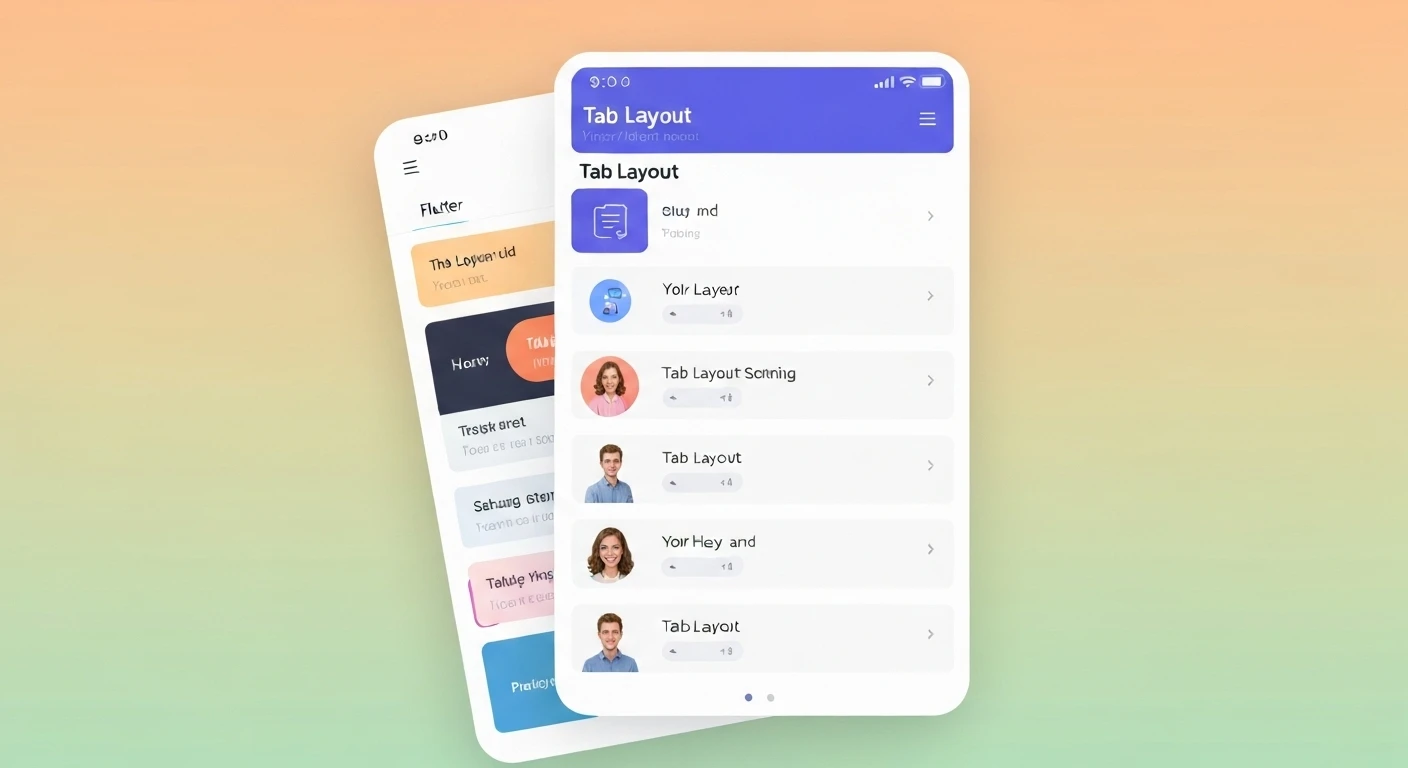

Creating Dynamic Tab Layout Widgets in Flutter
Tab layouts are a fundamental UI pattern for organizing content, allowing users to navigate between different sections within the same screen. While static tab layouts are straightforward to implement in Flutter, building dynamic tab layouts—where tabs can be added, removed, or changed based on user interaction or data—introduces a bit more complexity. This article will guide you through creating such a dynamic tab layout widget in Flutter, providing a robust solution for flexible user interfaces.
Understanding the Core Widgets
Before diving into dynamism, let's review the core Flutter widgets that facilitate tab layouts:
DefaultTabController: This widget coordinates theTabBarandTabBarView. It manages the state for the selected tab and ensures they are in sync. You typically wrap your entire screen or a significant part of it with this widget.TabBar: Displays the actual tab headers (e.g., "Home", "Settings", "Profile"). It takes a list ofTabwidgets.TabBarView: Displays the content associated with each tab. It takes a list ofWidgets, where each widget corresponds to a tab at the same index in theTabBar.
A basic static tab setup looks like this:
import 'package:flutter/material.dart';

void main() {
  runApp(const MyApp());
}

class MyApp extends StatelessWidget {
  const MyApp({super.key});

  @override
  Widget build(BuildContext context) {
    return MaterialApp(
      home: DefaultTabController(
        length: 3, // Number of tabs
        child: Scaffold(
          appBar: AppBar(
            title: const Text('Static Tabs'),
            bottom: const TabBar(
              tabs: [
                Tab(icon: Icon(Icons.home), text: 'Home'),
                Tab(icon: Icon(Icons.settings), text: 'Settings'),
                Tab(icon: Icon(Icons.person), text: 'Profile'),
              ],
            ),
          ),
          body: const TabBarView(
            children: [
              Center(child: Text('Home Content')),
              Center(child: Text('Settings Content')),
              Center(child: Text('Profile Content')),
            ],
          ),
        ),
      ),
    );
  }
}
The Challenge of Dynamism
The DefaultTabController, TabBar, and TabBarView primarily expect a fixed length and static lists of Tab and content Widgets. To make them dynamic, we need to manage these lists within a StatefulWidget and update them using setState(). The key is to ensure that the length property of DefaultTabController always matches the current number of tabs.
Implementing Dynamic Tabs
We will create a StatefulWidget that holds the lists of tabs and their corresponding content widgets. We'll also implement methods to add and remove tabs.
1. Initial Setup and State Management
First, define the main structure of your dynamic tab widget. We'll use a StatefulWidget to manage the lists of tabs and their content.
import 'package:flutter/material.dart';

class DynamicTabScreen extends StatefulWidget {
  const DynamicTabScreen({super.key});

  @override
  State<DynamicTabScreen> createState() => _DynamicTabScreenState();
}

class _DynamicTabScreenState extends State<DynamicTabScreen> {
  List<Tab> _tabs = [
    const Tab(text: 'Tab 1'),
  ];
  List<Widget> _tabContents = [
    const Center(child: Text('Content for Tab 1')),
  ];

  int _currentIndex = 0; // To keep track of the selected tab for removal

  @override
  Widget build(BuildContext context) {
    return DefaultTabController(
      length: _tabs.length,
      initialIndex: _currentIndex < _tabs.length ? _currentIndex : _tabs.length > 0 ? _tabs.length - 1 : 0,
      child: Scaffold(
        appBar: AppBar(
          title: const Text('Dynamic Tabs'),
          bottom: TabBar(
            tabs: _tabs,
            isScrollable: true, // Useful for many tabs
            onTap: (index) {
              setState(() {
                _currentIndex = index;
              });
            },
          ),
          actions: [
            IconButton(
              icon: const Icon(Icons.add),
              onPressed: _addTab,
            ),
            IconButton(
              icon: const Icon(Icons.remove),
              onPressed: _removeTab,
            ),
          ],
        ),
        body: TabBarView(
          children: _tabContents,
        ),
      ),
    );
  }
}
In the code above:
_tabsand_tabContentsare lists managed by the widget's state.DefaultTabController'slengthis dynamically set to_tabs.length.initialIndexis handled carefully to prevent errors if the current index is out of bounds after a tab removal.TabBar'stabsproperty uses our dynamic_tabslist.isScrollable: trueis good practice for dynamic tabs, as the number of tabs might exceed the screen width.TabBarView'schildrenproperty uses our dynamic_tabContentslist.- Action buttons in the
AppBartrigger_addTaband_removeTabmethods.
2. Adding a New Tab
The _addTab method will create a new Tab and a corresponding content Widget, then add them to our lists. We use setState() to rebuild the UI with the new tabs.
  // ... inside _DynamicTabScreenState
  void _addTab() {
    setState(() {
      int newTabIndex = _tabs.length + 1;
      _tabs.add(Tab(text: 'Tab $newTabIndex'));
      _tabContents.add(Center(child: Text('Content for Tab $newTabIndex')));
      _currentIndex = _tabs.length - 1; // Select the newly added tab
    });
  }
3. Removing a Tab
Removing a tab requires a bit more care, especially regarding the currently selected tab. We need to ensure that if the selected tab is removed, a valid tab is selected afterwards.
  // ... inside _DynamicTabScreenState
  void _removeTab() {
    if (_tabs.length > 1) { // Ensure at least one tab remains
      setState(() {
        _tabs.removeAt(_currentIndex);
        _tabContents.removeAt(_currentIndex);

        // Adjust _currentIndex if necessary
        if (_currentIndex > 0 && _currentIndex == _tabs.length) {
          _currentIndex--; // If the last tab was removed, select the new last tab
        } else if (_tabs.isEmpty) {
          _currentIndex = 0; // No tabs left
        }
      });
    } else {
      ScaffoldMessenger.of(context).showSnackBar(
        const SnackBar(content: Text('Cannot remove the last tab!')),
      );
    }
  }
Putting It All Together (Full Example)
Here is the complete code for a dynamic tab layout where you can add and remove tabs:
import 'package:flutter/material.dart';

void main() {
  runApp(const MyApp());
}

class MyApp extends StatelessWidget {
  const MyApp({super.key});

  @override
  Widget build(BuildContext context) {
    return MaterialApp(
      title: 'Dynamic Tabs Demo',
      theme: ThemeData(
        primarySwatch: Colors.blue,
        visualDensity: VisualDensity.adaptivePlatformDensity,
      ),
      home: const DynamicTabScreen(),
    );
  }
}

class DynamicTabScreen extends StatefulWidget {
  const DynamicTabScreen({super.key});

  @override
  State<DynamicTabScreen> createState() => _DynamicTabScreenState();
}

class _DynamicTabScreenState extends State<DynamicTabScreen> {
  List<Tab> _tabs = [
    const Tab(text: 'Tab 1'),
  ];
  List<Widget> _tabContents = [
    const Center(child: Text('Content for Tab 1')),
  ];

  int _currentIndex = 0; // Keeps track of the currently selected tab index

  @override
  Widget build(BuildContext context) {
    // The key here is essential for DefaultTabController to reinitialize
    // when its length changes. Without it, the controller might not update
    // correctly, leading to render issues.
    return DefaultTabController(
      key: ValueKey(_tabs.length), // Key based on tab count
      length: _tabs.length,
      initialIndex: _currentIndex < _tabs.length ? _currentIndex : _tabs.length > 0 ? _tabs.length - 1 : 0,
      child: Scaffold(
        appBar: AppBar(
          title: const Text('Dynamic Tabs'),
          bottom: TabBar(
            tabs: _tabs,
            isScrollable: true,
            onTap: (index) {
              setState(() {
                _currentIndex = index;
              });
            },
          ),
          actions: [
            IconButton(
              icon: const Icon(Icons.add),
              onPressed: _addTab,
              tooltip: 'Add New Tab',
            ),
            IconButton(
              icon: const Icon(Icons.remove),
              onPressed: _tabs.length > 1 ? _removeTab : null, // Disable if only one tab left
              tooltip: 'Remove Current Tab',
            ),
          ],
        ),
        body: TabBarView(
          children: _tabContents,
        ),
      ),
    );
  }

  void _addTab() {
    setState(() {
      int newTabIndex = _tabs.length + 1;
      _tabs.add(Tab(text: 'Tab $newTabIndex'));
      _tabContents.add(Center(child: Text('Content for Tab $newTabIndex')));
      _currentIndex = _tabs.length - 1; // Select the newly added tab
    });
  }

  void _removeTab() {
    if (_tabs.length > 1) { // Ensure at least one tab remains
      setState(() {
        _tabs.removeAt(_currentIndex);
        _tabContents.removeAt(_currentIndex);

        // Adjust _currentIndex if necessary
        if (_currentIndex >= _tabs.length) { // If the last tab was removed or current index is out of bounds
          _currentIndex = _tabs.isEmpty ? 0 : _tabs.length - 1; // Select the new last tab or 0 if empty
        }
      });
    } else {
      ScaffoldMessenger.of(context).showSnackBar(
        const SnackBar(content: Text('Cannot remove the last tab!')),
      );
    }
  }
}
Important Considerations
KeyforDefaultTabController: When thelengthofDefaultTabControllerchanges, it's crucial to provide aKey(e.g.,ValueKey(_tabs.length)). This forces Flutter to reinitialize theDefaultTabControllerand its internal state, which is necessary for it to correctly adapt to the new number of tabs. Without this, you might encounter rendering issues or incorrect tab selection.- State Management: For more complex applications, consider using a dedicated state management solution (Provider, BLoC, Riverpod) instead of just
setState()to manage your list of tabs and their content, especially if the data comes from an external source or needs to be shared across multiple widgets. - Tab Content Lifecycle: Be mindful of the lifecycle of widgets within
TabBarView. By default,TabBarViewkeeps all tab contents alive, which can consume memory for a very large number of tabs. If your tab content is resource-intensive and you have many dynamic tabs, you might need to implement a custom solution or consider third-party packages that offer more control over content disposal. - User Experience: Provide clear visual feedback when tabs are added or removed. Ensure the selected tab remains consistent or gracefully shifts to a logical alternative.
- Error Handling: Add checks (like preventing removal of the last tab) to ensure a stable user experience.
Conclusion
Creating dynamic tab layouts in Flutter is highly achievable by leveraging StatefulWidget to manage the lists of Tabs and their corresponding content widgets. The key is to correctly update these lists using setState() and, critically, provide a Key to your DefaultTabController to ensure it rebuilds and reinitializes with the new tab count. This approach provides a flexible and powerful way to build adaptable user interfaces in your Flutter applications.